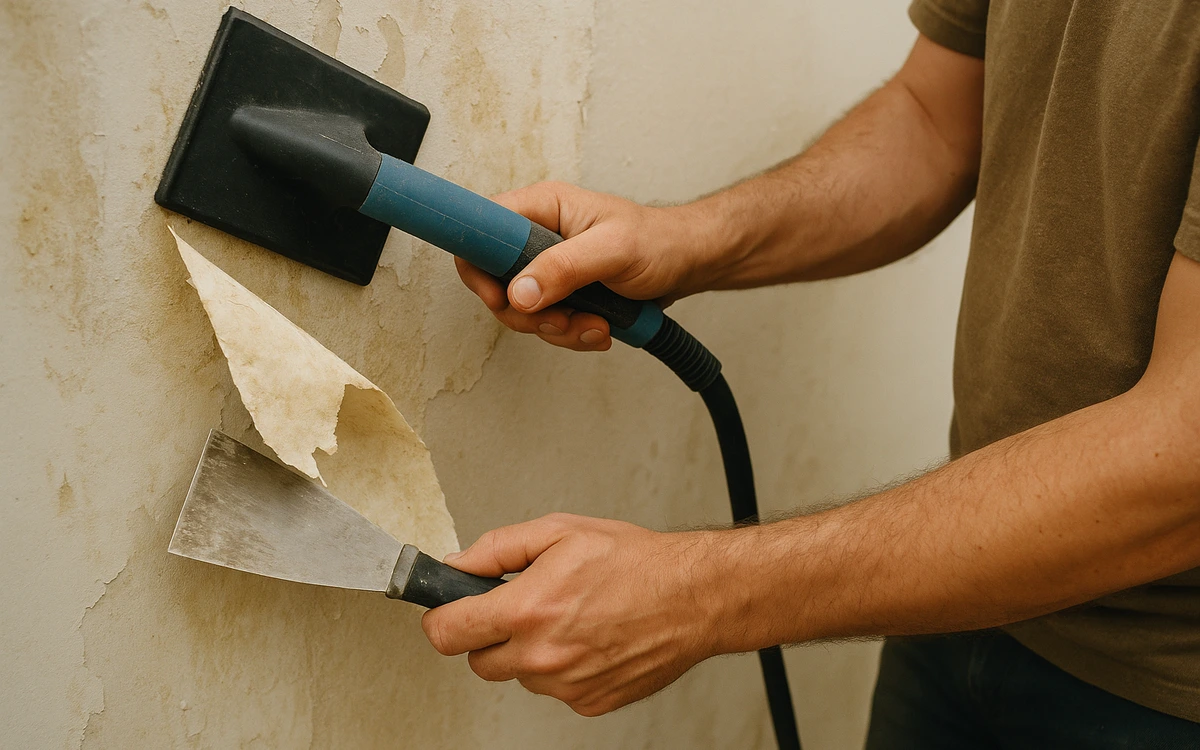
We provide professional wallpaper removal services nationwide, handling walls, trim, and delicate surfaces carefully to minimize damage and leave the space ready for proper repair and refinishing. Request a quote today.
How Can You Tell If Wallpaper Removal Is Actually Needed?
If you’re noticing any of these signs, the wall surface is usually already compromised or the wallpaper bond is starting to fail. At that point, removal is no longer just a cosmetic update—it becomes part of the prep and repair process before paint or new wall covering can go on. Recognizing the pattern matters, because some conditions call for scraping and steam, while others require substrate repairs first. A careful assessment helps determine whether the issue is isolated at the surface or tied to moisture, adhesive failure, or a damaged wall underneath.
- Bubbling or blisters under the wallpaper
- Peeling seams that lift along edges
- Wallpaper stains bleed through after drying
- Wallpaper feels rough and powdery when rubbed
- Wallpaper backing tearing during dry scraping
Why Does Wallpaper Bubble or Blister Even If It Looks Intact?
Bubbles usually mean moisture or steam became trapped at the paper-to-wall interface, or the adhesive has released in patches. Vinyl-faced wallpaper can hold in humidity, and older paste often softens over time, causing swelling wherever the bond has failed. If you see blisters, simply smoothing them back down rarely solves the real problem—once the adhesive has let go, paint over the area will usually telegraph those weak spots. In most cases, the right solution is controlled removal, often using steam and careful scraping, followed by a flat skim coat on any drywall, plaster, or other substrate that was damaged during failure or removal.
What Causes Wallpaper Seams to Peel Along the Edges?
Seams that lift along the edges usually point to aging adhesive at the joints, movement near corners or trim, or weak bonding over an uneven wall surface. If the wallpaper was installed over rough drywall, old paint, or poorly prepared areas, the seam is often the first place the bond gives out. Once the edges begin to curl, dust and moisture work their way behind the paper and keep the failure progressing, even if the rest of the sheet still looks secure. The practical approach is to start at those loose seams, test the surrounding bond with light probing, and remove material back to a stable surface before new lining paper or paint is applied.
Why Do Wallpaper Stains Bleed Through After the Wall Dries?
If stains return after the wall dries, they’re usually coming from water-soluble residue in the wallpaper or adhesive, or from an older leak moving back through the substrate. With aging wallpaper, tannins in the paper, nicotine, plaster dust, and similar contaminants can migrate to the surface again as the wall dries and warms. That kind of staining is a warning that you can’t simply paint over the area and expect it to stay hidden; if the source isn’t handled and blocked properly, the new finish can discolor or fail. The correct workflow is to remove the wallpaper first, rinse or clean residue where needed, allow the wall to dry fully, and then apply an appropriate stain-blocking primer system before any finish coat goes on.
Why Does Wallpaper Feel Rough and Powdery When You Rub It?
A rough, powdery feel usually means the wallpaper surface is breaking down, or the paste and paper fibers are deteriorating where the layers are starting to delaminate. Dry, aging wallpaper can shed like chalk, and that loose material often transfers to your hand, especially in high-touch areas or around switches and doorways. If you scrape off the powder but leave unstable material behind, new paint may bond poorly and start peeling much sooner than expected. The best plan is to remove the wallpaper until you reach solid, well-bonded backing or bare substrate, then clean, patch, and skim any worn or damaged areas so the wall is properly prepared for the next finish.
What Does It Mean When Wallpaper Backing Tears During Dry Scraping?
When the backing tears during dry scraping, it usually means the wallpaper won’t release cleanly as a full sheet. In many cases, the top layer separates while the lower layer remains stuck in scattered areas. That’s common with double-layer wallpapers or installations where the adhesive was mixed or applied unevenly, leading to patchy release. In that situation, dry scraping alone often creates more torn fragments, more cleanup, and more ridges left behind on the wall. The better fix is to switch to controlled loosening—typically steam or wetting to soften the adhesive—then scrape carefully and clean the wall back to a consistent, sound substrate that can be repaired and refinished properly.
How Much Does Wallpaper Removal Cost?
Wallpaper removal typically costs between $650 and $2,100, depending on the square footage involved and whether vinyl or multi-layer paper needs more careful loosening. Pricing also changes with wall condition, since damaged drywall, old paste residue, and stain-blocking requirements can add repair time and extra primer prep. Access plays a role as well, because working around trim, outlets, and tight corners takes longer and often increases cleanup and patching material needs.
Our Service Area
We provide services nationwide, including in the following cities:
Alabama
- Anniston, AL
- Birmingham, AL
- Decatur, AL
- Dothan, AL
- Florence, AL
- Huntsville, AL
- Mobile, AL
- Montgomery, AL
- Selma, AL
- Tuscaloosa, AL
Alaska
Arizona
Arkansas
- El Dorado, AR
- Fayetteville, AR
- Fort Smith, AR
- Jonesboro, AR
- Little Rock, AR
- Pine Bluff, AR
- Rogers, AR
- Springdale, AR
California
- Bakersfield, CA
- Chico, CA
- El Centro, CA
- Eureka, CA
- Fresno, CA
- Los Angeles, CA
- Modesto, CA
- Monterey, CA
- Oakland, CA
- Palm Springs, CA
- Redding, CA
- Sacramento, CA
- Salinas, CA
- San Diego, CA
- San Francisco, CA
- San Jose, CA
- San Luis Obispo, CA
- Santa Barbara, CA
- Santa Maria, CA
- Stockton, CA
- Visalia, CA
Colorado
Connecticut
District of Columbia
Florida
- Daytona Beach, FL
- Fort Lauderdale, FL
- Fort Myers, FL
- Fort Pierce, FL
- Fort Walton Beach, FL
- Gainesville, FL
- Jacksonville, FL
- Melbourne, FL
- Miami, FL
- Naples, FL
- Orlando, FL
- Panama City, FL
- Pensacola, FL
- Sarasota, FL
- St. Petersburg, FL
- Tallahassee, FL
- Tampa, FL
- West Palm Beach, FL
Georgia
Hawaii
Idaho
Illinois
- Bloomington, IL
- Champaign, IL
- Chicago, IL
- Decatur, IL
- Harrisburg, IL
- Moline, IL
- Peoria, IL
- Quincy, IL
- Rock Island, IL
- Rockford, IL
- Springfield, IL
- Urbana, IL
Indiana
- Elkhart, IN
- Evansville, IN
- Fort Wayne, IN
- Indianapolis, IN
- Lafayette, IN
- South Bend, IN
- Terre Haute, IN
Iowa
- Ames, IA
- Cedar Rapids, IA
- Davenport, IA
- Des Moines, IA
- Dubuque, IA
- Iowa City, IA
- Keokuk, IA
- Mason City, IA
- Ottumwa, IA
- Sioux City, IA
- Waterloo, IA
Kansas
Kentucky
Louisiana
- Alexandria, LA
- Baton Rouge, LA
- Lafayette, LA
- Lake Charles, LA
- Monroe, LA
- New Orleans, LA
- Shreveport, LA
Maine
Maryland
Massachusetts
Michigan
- Alpena, MI
- Battle Creek, MI
- Bay City, MI
- Cadillac, MI
- Detroit, MI
- Flint, MI
- Grand Rapids, MI
- Kalamazoo, MI
- Lansing, MI
- Marquette, MI
- Saginaw, MI
- Traverse City, MI
Minnesota
Mississippi
- Biloxi, MS
- Columbus, MS
- Greenville, MS
- Greenwood, MS
- Gulfport, MS
- Hattiesburg, MS
- Jackson, MS
- Laurel, MS
- Meridian, MS
- Starkville, MS
- Tupelo, MS
- West Point, MS
Missouri
- Cape Girardeau, MO
- Columbia, MO
- Hannibal, MO
- Jefferson City, MO
- Joplin, MO
- Kansas City, MO
- Kirksville, MO
- Springfield, MO
- St. Joseph, MO
- St. Louis, MO
Montana
Nebraska
Nevada
New Hampshire
New Mexico
New York
- Albany, NY
- Binghamton, NY
- Buffalo, NY
- Corning, NY
- Elmira, NY
- New York, NY
- Plattsburgh, NY
- Rochester, NY
- Schenectady, NY
- Syracuse, NY
- Troy, NY
- Utica, NY
- Watertown, NY
North Carolina
- Asheville, NC
- Charlotte, NC
- Durham, NC
- Fayetteville, NC
- Greensboro, NC
- Greenville, NC
- High Point, NC
- New Bern, NC
- Raleigh, NC
- Washington, NC
- Wilmington, NC
- Winston-Salem, NC
North Dakota
Ohio
- Akron, OH
- Canton, OH
- Cincinnati, OH
- Cleveland, OH
- Columbus, OH
- Dayton, OH
- Lima, OH
- Steubenville, OH
- Toledo, OH
- Youngstown, OH
- Zanesville, OH
Oklahoma
Oregon
Pennsylvania
- Altoona, PA
- Erie, PA
- Harrisburg, PA
- Hazleton, PA
- Johnstown, PA
- Lancaster, PA
- Lebanon, PA
- Philadelphia, PA
- Pittsburgh, PA
- Scranton, PA
- State College, PA
- Wilkes-Barre, PA
- York, PA
Rhode Island
South Carolina
- Aiken, SC
- Anderson, SC
- Charleston, SC
- Columbia, SC
- Florence, SC
- Greenville, SC
- Myrtle Beach, SC
- Spartanburg, SC
South Dakota
Tennessee
Texas
- Abilene, TX
- Amarillo, TX
- Austin, TX
- Beaumont, TX
- Brownsville, TX
- Bryan, TX
- Corpus Christi, TX
- Dallas, TX
- El Paso, TX
- Fort Worth, TX
- Harlingen, TX
- Houston, TX
- Laredo, TX
- Longview, TX
- Lubbock, TX
- Lufkin, TX
- McAllen, TX
- Midland, TX
- Nacogdoches, TX
- Odessa, TX
- Port Arthur, TX
- San Angelo, TX
- San Antonio, TX
- Sherman, TX
- Sweetwater, TX
- Temple, TX
- Texarkana, TX
- Tyler, TX
- Victoria, TX
- Waco, TX
- Weslaco, TX
- Wichita Falls, TX
Utah
Vermont
Virginia
- Bristol, VA
- Charlottesville, VA
- Harrisonburg, VA
- Lynchburg, VA
- Newport News, VA
- Norfolk, VA
- Petersburg, VA
- Portsmouth, VA
- Richmond, VA
- Roanoke, VA
Washington
West Virginia
- Beckley, WV
- Bluefield, WV
- Charleston, WV
- Clarksburg, WV
- Huntington, WV
- Oak Hill, WV
- Parkersburg, WV
- Weston, WV
- Wheeling, WV
Wisconsin
- Appleton, WI
- Eau Claire, WI
- Green Bay, WI
- La Crosse, WI
- Madison, WI
- Milwaukee, WI
- Rhinelander, WI
- Superior, WI
- Wausau, WI